Risk Management is essential regardless of an organization’s industry, as it provides numerous advantages—from process analysis to guiding decision-making. After all, understanding your organization’s risks offers a clearer overall view and supports the development of a solid strategy.
Every well-established, high-performing company considers risk management a fundamental component of its operations. Basic methodologies such as SWOT analysis—which assesses strengths, weaknesses, opportunities, and threats—already set the tone when it comes not only to remaining in the market but also to staying competitive. In addition, ISO 31000 serves as a key guideline for these practices.
Although it may seem straightforward, challenges and unforeseen issues can still arise. Companies may be impacted by internal or external factors and, by underestimating the importance of effective risk management, may be forced to halt operations or even face bankruptcy.
To ensure effectiveness, attention to detail is essential: governance practices must be integrated into the company’s daily activities, including decision-making processes. It is also important to consider integration, design, implementation, evaluation, and continuous improvement, with a strong focus on leadership and commitment.
Leveraging software for risk management further enhances efficiency, as it allows all risk-related data to be centralized in a single environment—such as the Interact Risk within the Interact Suite.
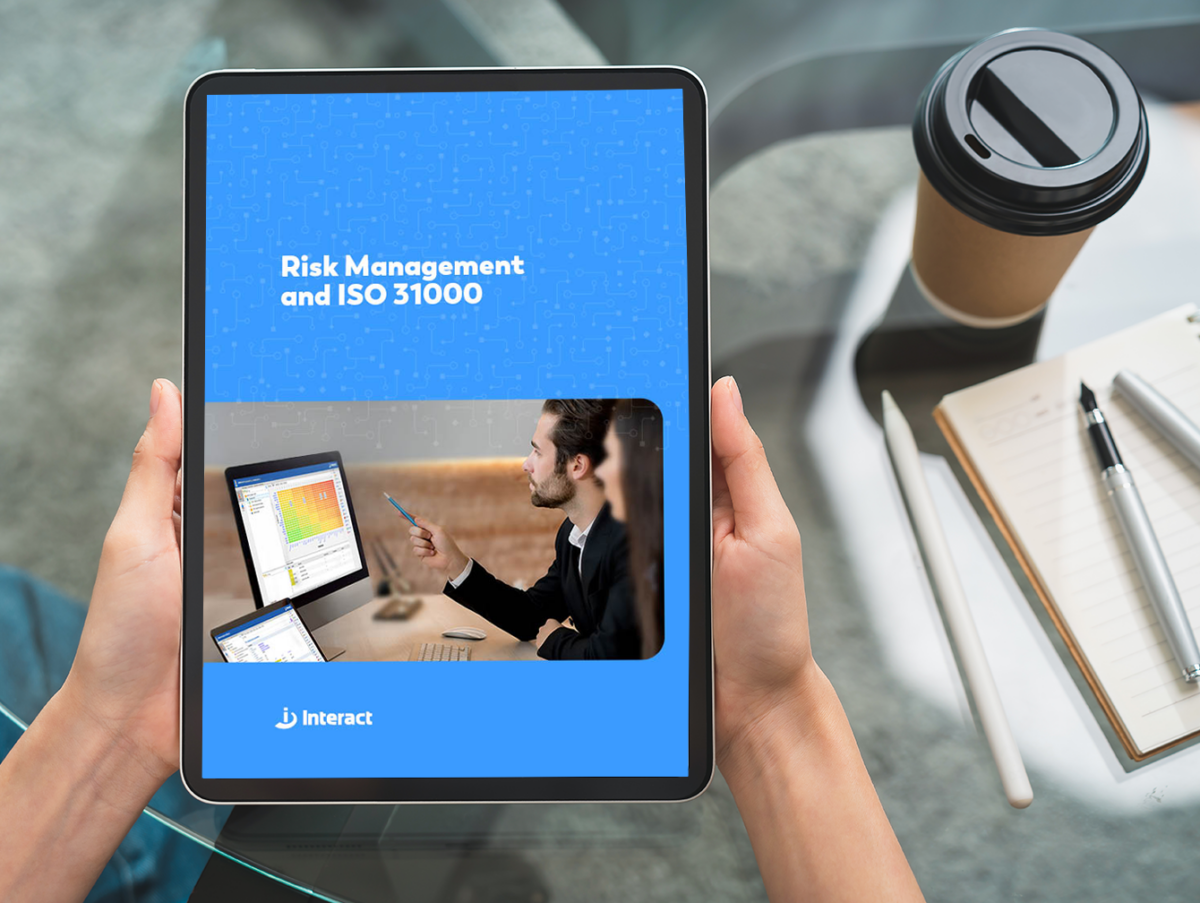
In this eBook, you will find tips and recommendations to align your organization’s risk management practices with ISO 31000.