Satisfaction Surveys: Turn Feedback into Valuable Management Insights
Listening to customers and other stakeholders involved in a company’s processes is an important practice for understanding perceptions, identifying areas that require attention, and guiding improvements.
Satisfaction surveys make this listening process more structured. Through them, organizations can collect feedback and gather relevant information to evaluate results and support decision-making.
With digital transformation, this process has gained new possibilities. Physical barriers have been reduced, more people can be reached, and survey results can play a more strategic role in management.
However, expanding data collection is not enough. For feedback to contribute effectively to the organization, it is also necessary to consider how surveys are conducted, monitored, and connected to other processes.
When a Survey Becomes More Than Just a Collection of Opinions
The information obtained through a survey can reveal important perceptions about experiences, projects, and processes. However, without an adequate structure, organizations risk accumulating responses without being able to turn them into action.
How can this operation be organized? How can technology support feedback monitoring? And what should be considered to ensure that surveys contribute to continuous improvement?
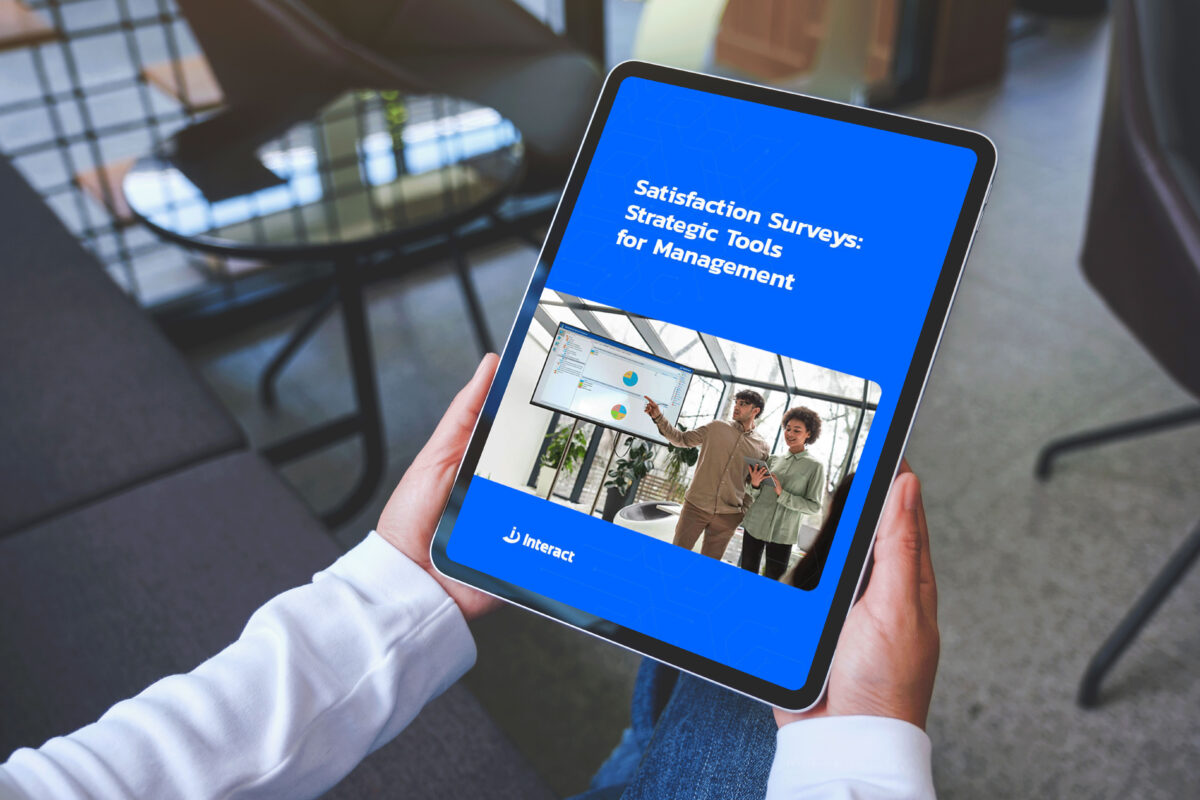
These are some of the topics explored in the free e-book “Satisfaction Surveys: Strategic Tools for Management,” developed by Interact.
Discover a New Perspective on Satisfaction Surveys
The material explores the evolution of surveys, the challenges faced in this area, and the changes brought about by digital transformation.
It also presents how integrated tools can support this process and connect satisfaction surveys more closely to the reality of organizational management. The complete explanations, possibilities, and details about this relationship are available in the full content.
More than collecting responses, organizations need to understand what can be built from the insights they provide.