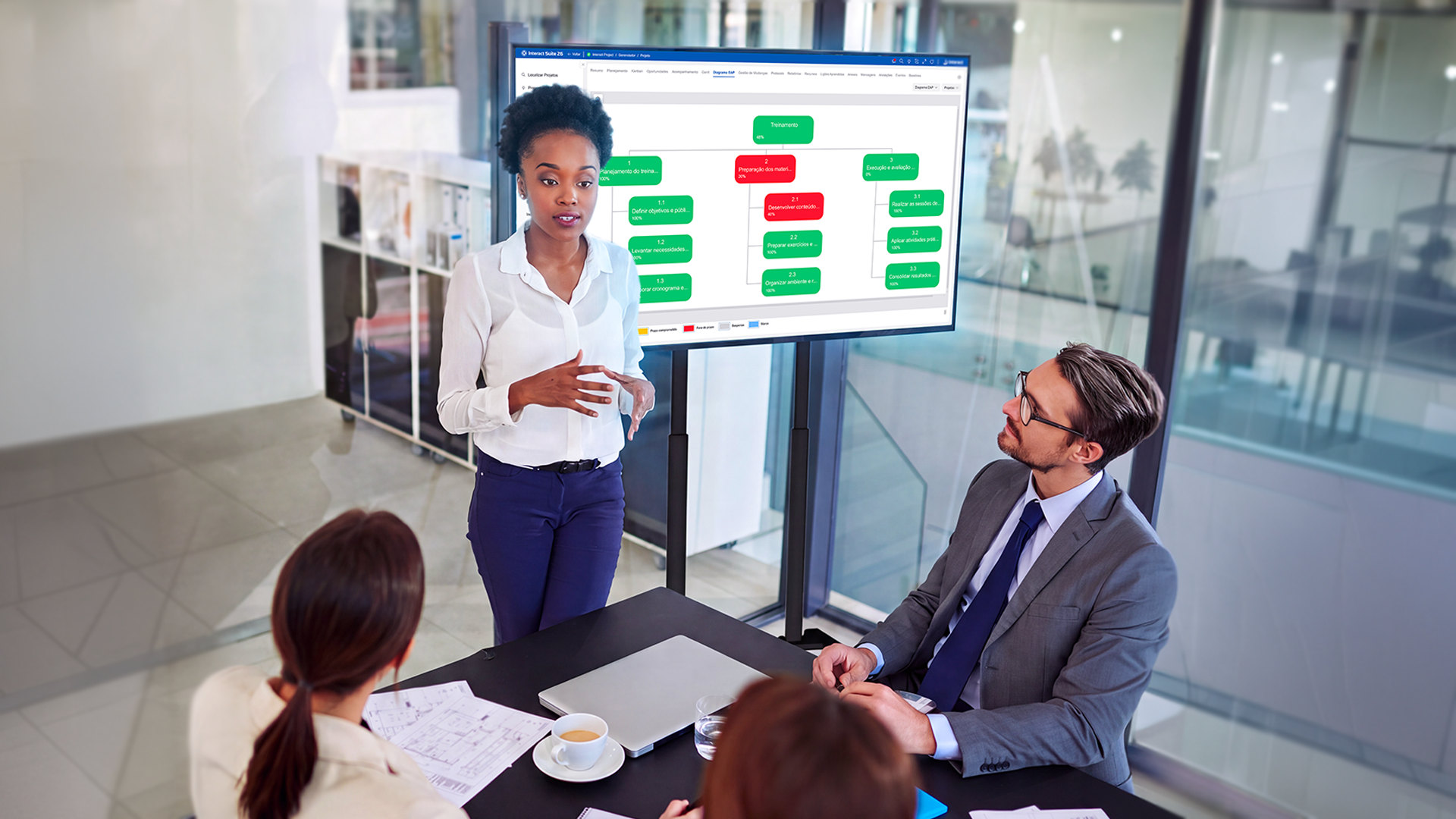
A few days ago, we were in a session with the executive team at GNU Mexico, an organization that not only seeks to project itself into the future, but whose visionary leaders are genuinely committed to guiding the organization toward the future through decisions made in the present.
During this meeting, we explored the relevance of bringing traditional strategic planning (with a four- or five-year horizon) into dialogue with scenario-based planning and strategic foresight (with a 10-year horizon) as part of business decision-making.
Through dynamic analogies and case studies such as those of Shell, DHL, and Amazon, among others, we emphasized that the future is not something to be predicted, but rather something to be shaped through actions taken in the present. We highlighted the need to move beyond the debate over whether organizations should work with short- or long-term horizons and to challenge the preconceptions shaped by the past through “rearview mirror” data analysis. Instead, organizations should identify early signals of change and transformative developments that may shape the future through the exploration of future scenarios.
We propose integrating complex and systems thinking so that organizations can anticipate crises and achieve competitive sustainability in uncertain and adverse environments.
Finally, the dialogue with GNU’s executives underscored the importance of transforming organizational culture and building a shared long-term vision. Here, we share some of the concepts that were brought to the table.
The Dialectic Between Projective and Prospective Thinking
Let us leave the academic debate over the appropriateness of these two approaches to strategy to academia. In today’s global ecosystem and organizational practice, depending on the sector in which we operate, we encounter highly complex environments characterized by what is now referred to as polycrisis. Moving beyond the VUCA (volatile, uncertain, complex, and accelerated) and BANI (brittle, anxious, nonlinear, and incomprehensible) models used to describe the current context, some now refer to these environments as VIRCAs (volatile, uncertain, immediate, noisy, complex, accelerated, ambiguous, simultaneous, and marked by disparities). In the face of such complexity, linear planning has become insufficient. An organization’s sustainability no longer depends solely on its ability to optimize the past through continuous improvement, but also on its ability to anticipate and build plural futures.
“We are likely to build a better carriage, but we will hardly ever arrive at an automobile.”
With this in mind, the core of a strategy that is both robust and flexible lies in the convergence of two vectors of thought:
-
Projective Thinking (“forecast”): This is the approach most commonly used in organizations, generally based on what I call “rearview mirror data” (using the metaphor of a company as a car, where decisions are made by looking more at the rearview mirrors, or data from the past, than through the windshield, or data about the future), extrapolating historical data into trend-based projections. While it is essential for short- and medium-term operational and financial management, there is a risk of “driving while looking only in the rearview mirror“, ignoring the curves and obstacles that the medium and long-term future may present. It is based on the logic of the “project“: it is structured around data from the past, and decisions are made in the present about what will be done in the future, without considering that future itself, while seeking to minimize risks as much as possible.
-
Prospective Thinking (The Windshield): In French, it is defined through prospicere, meaning “to see far and broadly.” It does not seek to predict the future—which is impossible, since the future does not materially exist—but rather to develop reasoned conjectures about possible, plausible, and desirable futures. It is based on the logic of the “prospect“: that is, traveling to or standing in the future and looking back toward the present in order to connect those futures with the present through strategic decision-making.
The future sustainability of organizations does not lie in applying one model or the other to decision-making, much less in pitting them against each other to determine which is more efficient or effective. True strategic flexibility emerges when we bring these two models into dialogue.
It is not a matter of choosing the long term over the short term, or vice versa, but of synchronizing them like the wheels of a vehicle so that they move in the same direction. It means developing the ability to discern when to look in the rearview mirror and when to look through the windshield in order to manage the organization toward better performance and long-term sustainability.
Toward Multidimensional Planning
For both senior management and expert consultants, bringing these two management thinking models into dialogue requires changes in the way we think about, perceive, and experience the organization and its context. Preconceptions and domain biases (our own expertise) can lead us astray when looking toward the future, preventing us from seeing what needs to be seen because we remain focused on what we want to see. Therefore, when it comes to technical implementation, we should consider the following:
-
Complex and Systems Thinking: Understand that organizational variables do not operate in isolation. When combined, they can give rise to emergent capabilities within the organizational system or its environment. Consider, for example, hydrogen and oxygen: individually, they do not have the same properties as water, but when they interact, they form water, from which new properties emerge. Early detection of these attributes or emergent capabilities can be the source of opportunities to develop new value propositions, whether in the product, service, or experience portfolio, or in the organization’s processes, structure, and culture.
-
Horizon and Scenario Management: Manage horizons and scenarios dialectically, understanding that horizons are linear in nature, meaning they occur sequentially, one after another, as in the short, medium, and long term. Scenarios, by contrast, are parallel and multiple, emerging as alternative futures or different possibilities within the same future.
-
Future-Based Innovation: Connect images of the future and creative imagination with innovation management. Without dialogue between them, the organization simply “catches up” instead of anticipating the future.
In conclusion, future sustainability requires decision-makers to strategically integrate these aspects into the day-to-day management of their organizations. Harmoniously bringing together perspectives of the present and shared visions of the future enables organizations to:
-
Reduce uncertainty by considering multiple futures, aligning strategies with external factors, and improving risk management.
-
Strengthen organizational resilience and identify innovative opportunities.
-
Develop the ability to prepare organizations for unforeseen crises, ranging from natural disasters to economic or public health crises.
-
In a world where changes can occur suddenly and without warning, the ability to adapt quickly becomes a crucial competitive advantage.
-
Ensure that operational decisions remain aligned with the long-term vision while keeping associated risks in sight.
As Michael Porter said:
“Long-term planning is not about thinking about future decisions, but about the future of present decisions.”
Author: Enrique Rodero T. – Co-Creator of Strategic Futures for Organizations Organizational Projects