
If you work in project management, you have likely considered numerous ways to make your planning increasingly accurate, aiming to eliminate critical events or other issues during execution.
However, even the most well-designed and comprehensive plans cannot completely eliminate the risk of problems, simply because not everything can be controlled—especially in complex environments subject to multiple variables.
A clear example of this is the Apollo 13 mission, the seventh crewed mission of NASA’s Apollo program. Its objective was to land in a specific area of the Moon; however, an onboard explosion forced the mission to be aborted, giving rise to what became known as a “successful failure.”
What could have been one of the greatest disasters in history ultimately became a benchmark for crisis management and risk response—not only in project management, but across all business sectors.
Houston, We Have a Problem!
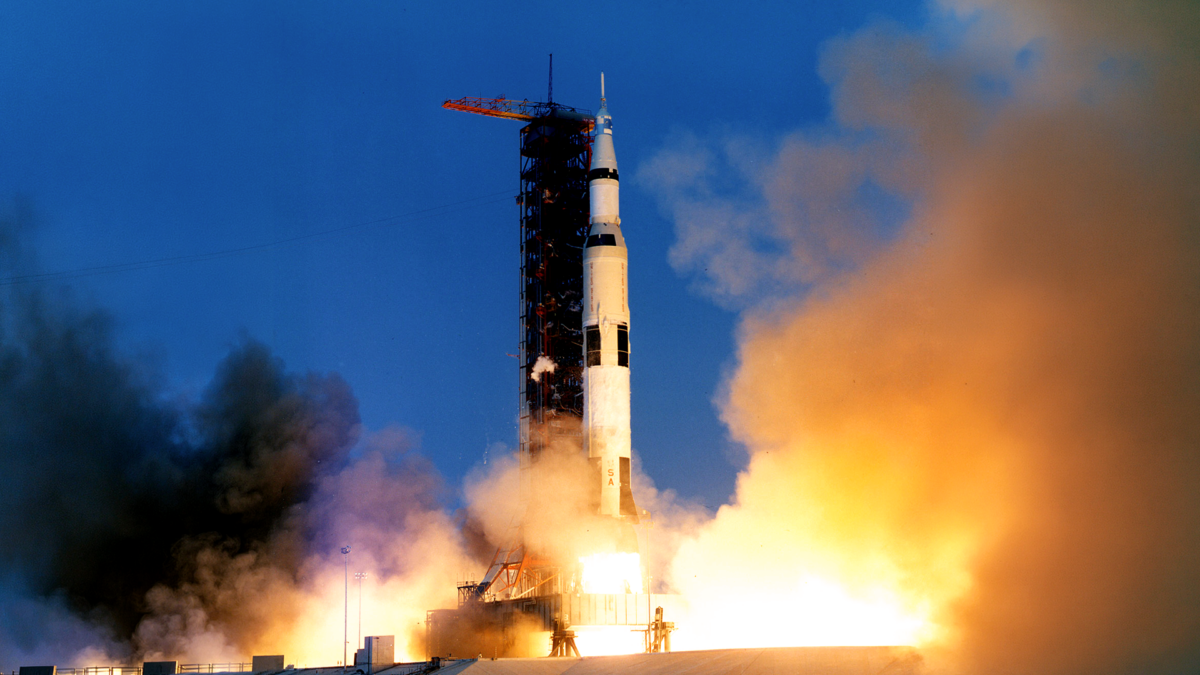
Launched in April 1970, the Apollo 13 spacecraft consisted of two independent modules connected only by a tunnel—the Command Module Odyssey and the Lunar Module Aquarius, both of which proved essential for the crew’s survival after the critical incident.
Two days after launch, the Moon landing had to be aborted due to the explosion of an oxygen tank, completely changing the mission’s objective. The explosion damaged the electrical and life support systems, forcing the crew to use the Aquarius as a “lifeboat.” From that moment on, the mission’s primary goal became bringing the crew safely back to Earth.
Preparation for this mission was extensive, lasting between eight and nine months, and included specialized training for the main crew, which began shortly after their assignment in 1969. The astronauts underwent more than 1,000 hours of training, with each astronaut completing over 400 hours in command module and lunar module simulators.
Numerous adjustments and ground tests were also conducted in an effort to anticipate risks and potential failures. Even so, approximately 200,000 miles from Earth, an incident left the spacecraft without its normal supply of electricity, light, and water from the command module.
The response had to be extremely fast, with little to no margin for error. New procedures had to be written and tested in simulators before being communicated to the crew.
In addition to the ground team, the mission benefited from lessons learned in previous missions, such as Apollo 11, whose lunar module had not been destroyed. Data from that mission indicated that its mechanisms could survive for the necessary period without cooling and water.
Despite challenges such as rationing water and food and enduring extreme cold due to the shutdown of electrical systems, all crew members returned safely after four days.
Lessons Learned for Project Management
– Document lessons learned:
Even within the context presented at the beginning of this article, we can already identify a key takeaway for our projects: document lessons learned.
Since Apollo 13 was not the first mission, the specialists involved in the rescue were able to rely on insights and data from previous missions to develop a contingency plan.
This knowledge—acquired through critical analysis of past experiences, whether failures or successes—ensures continuous improvement in future projects, prevents the repetition of mistakes, promotes process optimization, reduces costs, and can even increase the success rate of upcoming initiatives.
Therefore, in addition to documenting lessons learned, make sure to revisit them whenever necessary or when facing similar challenges.
– Even the best planning cannot eliminate risks:
Dedicating time and effort to the project planning phase is extremely important, as it helps ensure deadlines and budgets are met, improves communication and collaboration among stakeholders, supports more effective decision-making, enhances the quality of deliverables, and strengthens risk and issue management.
Although it cannot completely eliminate risks and problems, it enables effective risk management by anticipating potential issues and allowing the organization to prepare contingency plans.
More important than trying to prevent incidents altogether is being ready to act quickly and decisively to mitigate their impacts.
– Have a Plan B—even for Black Swan events:
When mapping project risks, teams usually focus on those most likely to occur and those whose impacts could threaten the organization’s existence.
However, it is important to remember that, although rare, Black Swan events do exist.
Mapping and planning a backup strategy for rare risks is essential for project survival. It prevents team paralysis and total failure, protects project timelines and budgets, and facilitates financial contingency management.
This way, all the effort invested up to the event will not be wasted. Even if the project’s objective changes—as in the case of Apollo 13—it can still be highly successful.
– Adaptability:
The mission began with the goal of landing on the Moon and ended with the objective of bringing all crew members safely back to Earth.
All professionals involved in this project had to reassess and adapt to new conditions. This characteristic is fundamental in project management, from the simplest to the most complex initiatives, as adaptability defines the response time to change.
With a team willing to adapt, it is possible to maintain focus on problem-solving and, consequently, achieve positive outcomes.
– Teamwork and leadership:
Teamwork in day-to-day project environments is essential for achieving effective results. Each team member brings unique skills and experiences that, when combined, foster diversity of thought and approaches.
In challenging environments—such as this mission—this diversity maximized effectiveness and enabled innovative solutions to emerge.
Additionally, a well-aligned and coordinated team is only possible with clear and objective leadership that remains focused on problem-solving. Effective and empathetic leadership can motivate team members, manage conflicts, facilitate communication, and adapt strategies.
Despite all these lessons, the most valuable one is clear: never ignore risk management.
Manage All Stages of Your Projects with Interact Suite
Leveraging solutions such as Interact Suite’s Project Management module contributes to effective risk management and monitoring. This is largely due to the platform’s complementary tools, including BAM Analysis, Five Whys Analysis, SWOT Analysis, Bow Tie, Risk Mapping, Layers of Defense, among others.
The solution also enables project planning and tracking according to each phase of the project lifecycle, integrating all stakeholders so they can work collaboratively and ensure execution according to schedule.
Inspired by the principles of the PMI – Project Management Institute, it offers the following benefits and features:
- Breakdown of projects into task hierarchies;
- Monitoring of project tasks and subtasks progress;
- Automatic notifications for messages, pending items, and deadlines;
- Export of projects to electronic calendars;
- Gantt chart visualization;
- Flexibility for portfolio organization;
- And much more.
Would you like to learn more about this solution? Contact us and request a demo.