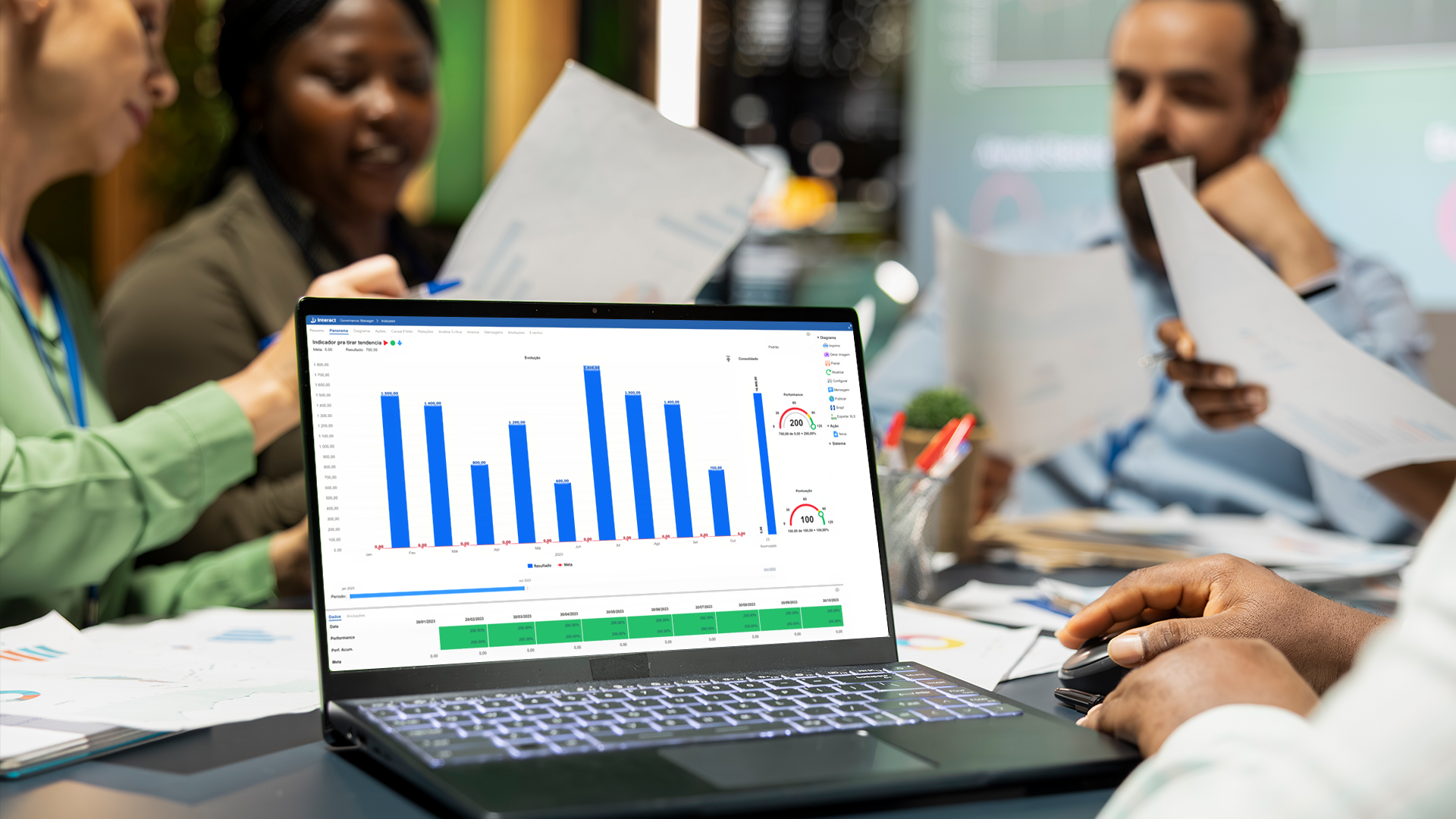
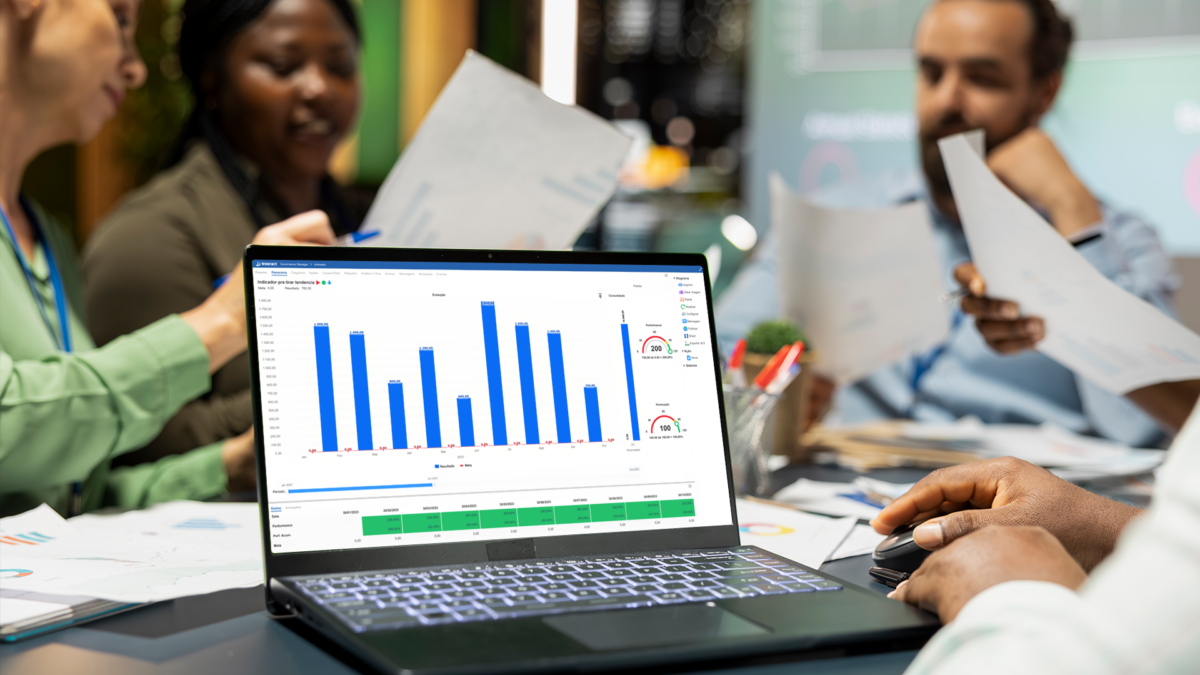
Does your company track process indicators?
There is frequent discussion about how an organization’s process management should be continuously evaluated in order to drive ongoing improvements. For this to happen, it is essential to establish indicators and metrics capable of assessing their effectiveness.
Another common question among companies is: how can you tell whether process management—or the processes that have been modeled—are actually working?
In reality, there is no other way to determine this than by setting clear objectives, so it is evident where you intend to go with them. Additionally, it is necessary to create monitoring indicators that can practically demonstrate their efficiency—or inefficiency.
Reasons to Monitor Process Indicators
As Peter Drucker once said, “What gets measured gets improved.” This is the fundamental reason why we advocate the use of indicators to measure process performance within an organization.
You should never consider the work complete after modeling and validating a process. At that point, you are simply closing one phase and beginning another—one that will continue as long as process management remains active within the company.
Metrics and indicators help identify bottlenecks, inefficiencies, and potential deviations, making it easier to uncover opportunities for process improvement. Another positively impacted aspect is decision-making, which becomes guided by real data and information.
Among other benefits, we can also highlight strategic alignment, efficiency monitoring, customer experience evaluation, and greater business transparency.
It is important to emphasize that starting process management without indicators is entirely possible. However, sustaining it in the long term without them becomes unfeasible. Without indicators, it is impossible to determine whether improvements have occurred, real bottlenecks may go unnoticed, data-driven decisions cannot be made, and it becomes difficult to know when a process has truly achieved success.
How to Choose Indicators?
“Aligning process performance with organizational goals is the primary reason for adopting process management practices.” – BPM CBOK 4.0
With that in mind, it is essential to have clear organizational objectives and a well-defined strategic plan in order to determine which indicators should be used to monitor an organization’s processes.
There is no universal list of metrics that will work for every company. However, if you are still unsure where to start, the BPM CBOK introduces PPIs (Process Performance Indicators), which are responsible for evaluating the efficiency, effectiveness, and consistency of processes.
A PPI should meet the following key characteristics:
– Process-focused: evaluates specific activities, such as cycle time.
– Actionable: provides data that enables managers to understand process performance and identify improvement opportunities.
– Performance standards: helps establish trends and ensures greater control over result variability.
– Comprehensive monitoring: covers all types of processes—primary, support, and management processes.
Examples of Indicators
– Time: measures the total time required to complete a process or cycle.
– Efficiency: evaluates the relationship between resources invested and results achieved.
– Productivity: measures output in relation to the resources used.
– Quality: assesses defect or error rates in products and services.
– Capacity: refers to the maximum volume of work a process can handle within a given period.
– Cost: evaluates expenses incurred during process execution.
– Compliance: verifies whether tasks were performed according to established standards.
In addition to these, organizations can incorporate other metrics that align with their processes and strategic planning needs.
Process Management and Its Indicators with Interact Suite
Process management goes far beyond process modeling itself. Therefore, using technological tools that stay aligned with market needs and innovations can significantly elevate the standard of your processes.
The Process Management solution within Interact Suite supports all stages of process management with efficiency and agility.
In addition to promoting alignment between organizational strategies, information technology, and operational technologies, it enables the generation of strategic data defined collaboratively through its indicator management solution.
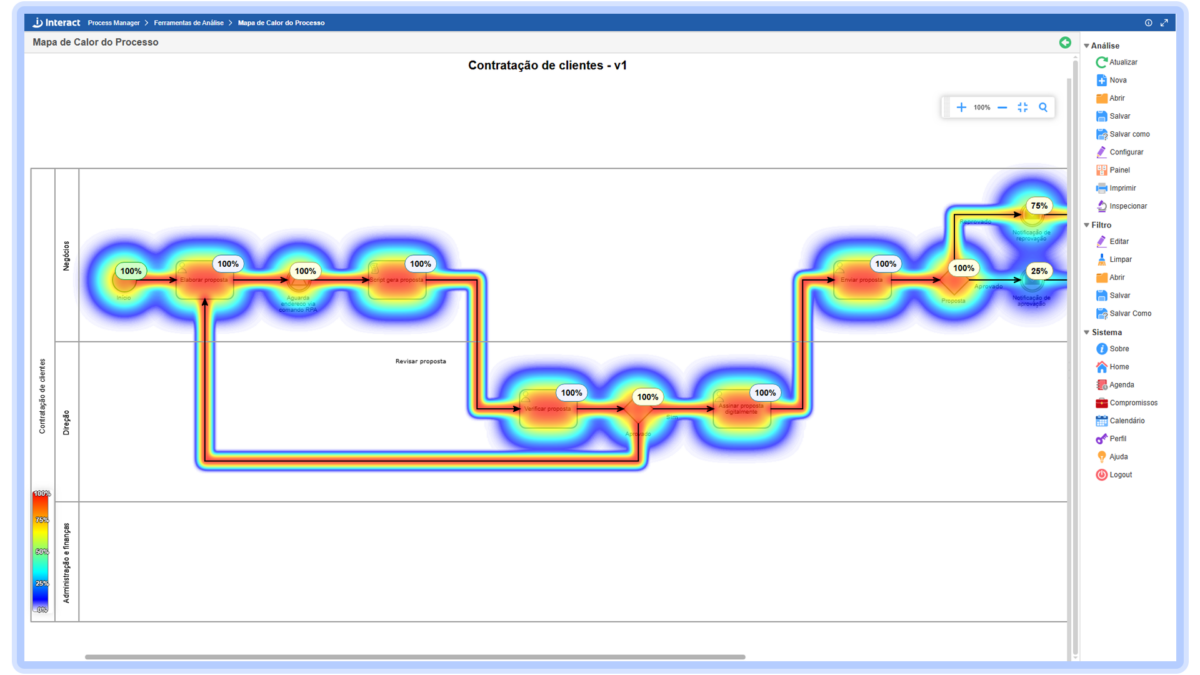
To make process monitoring even more comprehensive, the solution also offers a Heat Map feature, which provides a visual representation of process performance and highlights critical points. Through this functionality, teams can gain immediate insights, supporting faster and more effective decision-making.
Request a demo and transform your process management through intelligent monitoring of process indicators!