
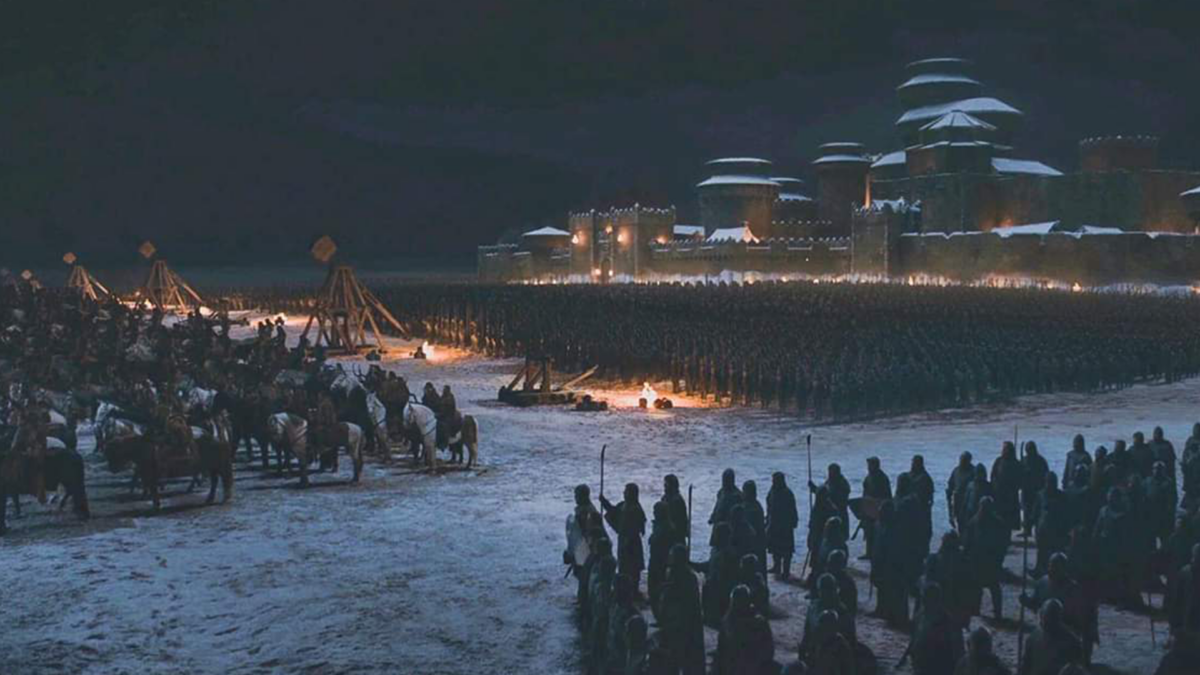
What would you do if you had to win a battle similar to those depicted in medieval-era films?
You would probably use every technological tool available to study your opponent, leverage artificial intelligence to learn the best war tactics in a short amount of time, turn to social media to recruit the strongest fighters, among many other possibilities.
However, none of these alternatives would be sufficient without strong strategic planning. A clear example is the Battle of Winterfell, featured in the eighth season of Game of Thrones, which was nearly lost due to simple mistakes that could have been avoided with a well-structured strategic plan.
But if you are not familiar with what we’re referring to, continue reading the rest of this article—we will provide context and highlight the main lessons this battle offers to managers and entrepreneurs, even those no longer living in the medieval age.
Contextualizing the Battle of Winterfell
Game of Thrones is an American television series that aired from 2011 to 2019, adapted from the book series A Song of Ice and Fire and created by David Benioff and D.B. Weiss.
The series follows the struggle for power among noble families across the continents of Westeros and Essos, focusing on the fight for the Iron Throne. One of the most remarkable events was the Battle of Winterfell, also known as the final battle against the Army of the Dead and the Night King, who threatened the very existence of humanity.
The Night King had long haunted the realms, as every person killed by his army immediately became part of it, ensuring unlimited resources and bringing him ever closer to his goal of ruling and destroying the world.
Management and Planning Lessons
At this point, you may be wondering what a fantasy-based battle can possibly teach you about strategic planning in the real world. Take a look:
– First Lesson: Risk Management
The first lesson emerges by highlighting failures in planning and, especially, in risk management. After all, the threat of the Army of the Dead had existed for many years, while preparations for the final battle began only a few months before it happened.
Being aware of risks that could threaten your company’s survival—yet failing to create response plans or mitigation actions—can lead your business to collapse in a very short time.
A Business Continuity Management plan, for example, enables fast responses and reduces impacts on the organization. In the series, the Night’s Watch monitored this risk, but what was the actual plan if the Army of the Dead were to invade?
– Second Lesson: Establish Clear Objectives
The primary objective of the battle was to eliminate the Army of the Dead, and that would only be possible by killing the Night King, as he controlled and sustained all the other soldiers.
Similarly, a company’s objectives must be clear and well structured. Otherwise, the subsequent steps will present failures, and actions will not be effective.
Consider the creation of SMART objectives:
- Specific – clear and objective, addressing the questions “What?”, “Why?”, “Who?”, “Where?”, and “Which?”
- Measurable – allows progress and outcomes to be quantified, assessing how close we are to achieving the result
- Achievable – realistic and attainable, considering available resources, time, and team capabilities
- Relevant – meaningful to the company and the teams involved, and aligned with the organization’s broader goals
- Time-bound – with a clear deadline or completion date, creating a sense of urgency and enabling proper planning
Considering these aspects, the objective of the Battle of Winterfell and its action plans demonstrated a lack of maturity in planning.
The focus was on killing the Night King—the plan relied on using the Three-Eyed Raven as bait to lure him. However, it was unclear who would actually eliminate the primary target or how it would happen. In the end, the plan succeeded only because of Arya Stark and her unexpected action.
So, before moving into action, plan carefully, evaluate all possible scenarios, and create contingency strategies for each one.
– Third Lesson: Use Resources Strategically
One of the most criticized decisions by strategists at the time was the positioning of the Dothraki (nomadic warriors and riders) on the front line with no contingency plan in case things went wrong.

In the context of the series, the Dothraki were considered the most feared forces in Westeros due to their physical strength and expertise in open-field combat. However, their strengths were considered without assessing their weaknesses in the specific context of that battle.
The intention behind their positioning was to delay and weaken the opposing army. However, due to the lack of organized military tactics and the absence of adequate armor, they were annihilated quickly.
The same can happen when a company wastes its most valuable resources—whether human or financial—on a single high-risk bet without proper planning.
Remember: your team needs to endure after the “battle.” Otherwise, your company may fall as well, even if a temporary victory is achieved.
– Fourth Lesson: Know Your Business Deeply
Effective planning is only possible when you understand your business thoroughly, map strengths and weaknesses, identify opportunities and risks, and use these insights to the organization’s advantage.
This is exactly what the Night King did by attacking under cover of darkness—a scenario he was already familiar with—turning it into a strategic advantage over his opponent, who became more vulnerable to cold and darkness.
In the real world, this mirrors companies that leverage their core strengths or established market positioning to launch new products or services and gain a competitive edge.
Opportunities can only be identified and exploited when leaders truly understand their business, enabling them to adapt to changes and market demands.
Don’t Undervalue the Power of Strategic Planning
Despite the shortcomings—and even the lack of a solid strategic plan—the Battle of Winterfell was won and the Night King was defeated.
However, the losses were countless, from financial resources to lives that could have been saved. And, upon closer analysis, the victory was only possible thanks to Arya Stark’s strategic vision and sharp insight, as she observed the situation from the outside, identified the risks, and acted quickly.

In the real world of business, we cannot rely on an “Arya” to save us during critical moments. Counting on a single person to have this level of strategic vision is extremely risky, regardless of the company’s size or its time in the market.
Strategic planning must indeed be encouraged by senior leadership, but its day-to-day execution is the responsibility of every team member.
Risk management also plays an essential role in the success and continuity of the business, as does constant monitoring and the creation of action plans for mitigation or rapid response in the face of incidents or threats. It also contributes to scenario and solution analysis.
After all, with the technology and resources we have today, we no longer need to depend on a single solution for problems or risks.
And finally, know where you want to go and what you will do to make it happen. Don’t wait for winter to arrive to take action and plan ahead.